
Let's cut to the chase - everyone eats emotionally once in a while. And in a moment of fear, panic, grief or anger, emotional eating can even be a form of self-care, especially if other tools aren't accessible in that moment. But, learning to cope with our emotions without (only) using food is one of the principles of intuitive eating and can help us learn to regulate our emotions when life throws us curveballs (or stressful elections).
Humans eat for all kinds of reasons and there are 3 types of hunger:
- Physical Hunger - the most obvious type that we usually feel in our stomach or body
- Taste Hunger - the type of hunger that makes our mouth water at the smell of freshly baked bread or cookies
- Emotional Hunger - the strong desire to eat something for reasons other than physical hunger
And all of them are all valid. So let's start from there.
What creates emotional hunger in perimenopause and menopause?
This could be a very long list. All kidding aside, the symptoms of menopause are uncomfortable, to put it mildly. Not sleeping? Mood swings? Brain fog? There are just a few of the ways menopause can drive emotional hunger. As I shared in this reel on Instagram the other week, menopause doesn't make us become emotional eaters, but it definitely puts a strain on our coping skills.
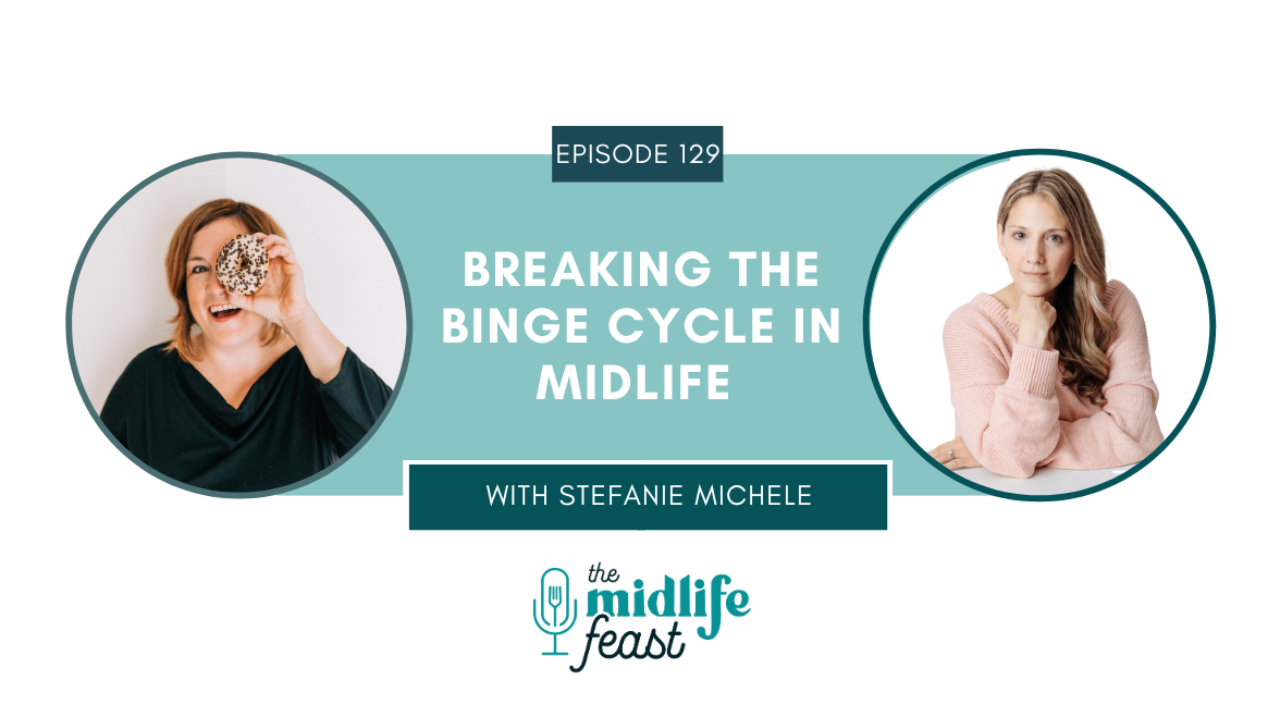
Don't blame yourself for choosing an accessible tool in your toolbox, because shame is a terrible motivator. This week's podcast episode with Stefanie Michele takes a deep dive into shame, emotional eating and binge eating and is worth a listen (or watch on YouTube) if you struggle with this.
3 Steps to Follow When You Have Emotional Hunger
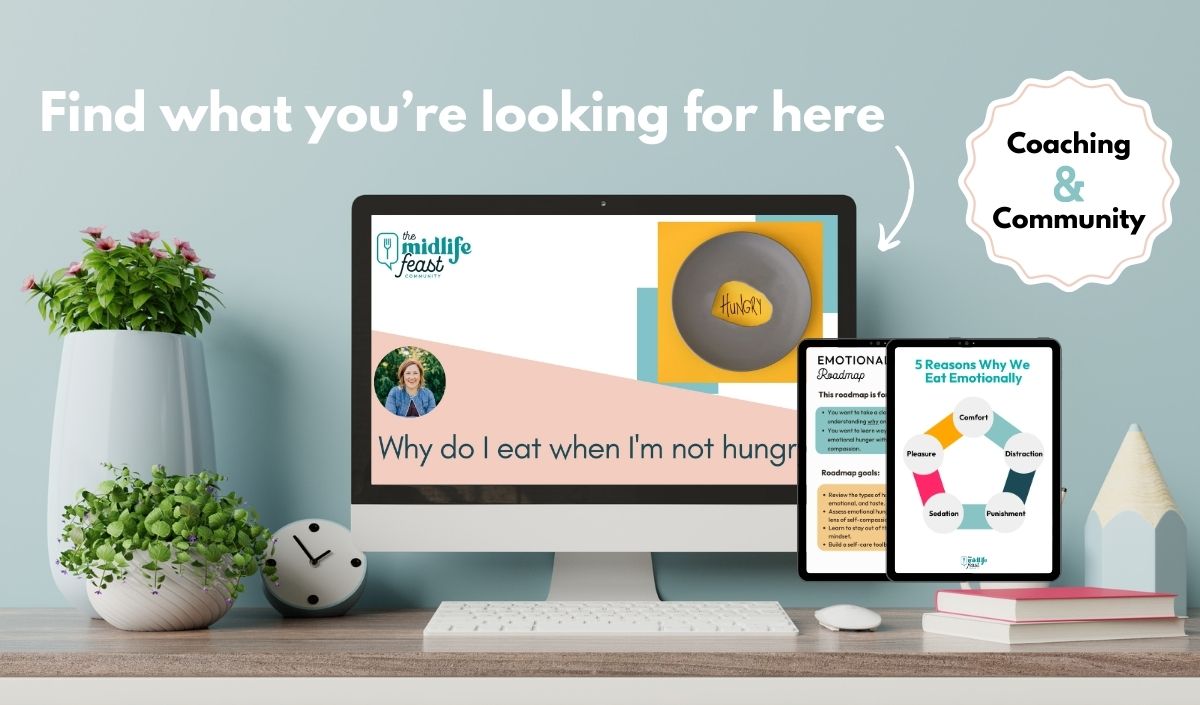
Instead of trying to summon willpower, learn to apply a self-compassionate lens to your relationship with food and follow the steps I teach in The Midlife Feast Community
1. Recognize that emotional hunger is a valid type of hunger and know that all humans eat emotionally - it’s not a character flaw or caused by menopause or sugary foods. Eating feels good and activates our parasympathetic nervous system, helping to calm us down in times of stress.
2. Learn to identify your emotional hunger triggers so you can feel better prepared when they show up. It's not just negative feelings either, positive emotions or even boredom can prompt emotional hunger.
3. Build a self-care toolbox designed to help you better manage the experience of midlife (not just menopause!) and learn new coping skills for the strong feelings and emotions that are showing up.
I know it can be hard to apply these steps in the moment, so if you'd like a copy of my Emotional Hunger Roadmap, you can grab it here. If you find it helpful, there are on-demand resources and support in The Midlife Feast Community and you can join us anytime.
Already a Member? - Log in Here
That's all for now! I'd love to hear from you - What's been your experience with emotional eating or hunger in midlife?
Jenn




Responses