
Hello September!
Like many people, I'm getting back into the swing of life after the summer holidays. August was pretty great and included a visit home to Nova Scotia, with a pit stop in Iceland along the way. I've become more intentional about my rest breaks over the years, and always welcome the pause from our usual rhythms and routines of the elusive work-life balance. This year was no different, as it's been a busy year for me, with lots of big (and fun!) things on the horizon.
Time to Hit Refresh
Notice something new? My weekly'ish newsletter has gotten an upgrade! It will still be delivered to your inbox, but you'll also find it on my website. The best part is that you can now leave comments and ask questions - something that readers have been asking for. It will also make it easier to find things I share with you, including recipes and articles.
The best part? It's free! Like The Midlife Feast podcast, my newsletter is one of the no-cost ways you can learn about midlife, menopause and intuitive eating. And if you decide you'd like to work together, subscribers will always be the first to hear about my programs and services.
Hold The Creatine Please
Creatine supplements aren't new. In fact, creatine is probably one of the most studied supplements ever. Its effect on muscle and strength is fairly well-established, as is its safety.
But that's not why I started taking it in February of this year. In addition to creatine's effect on muscle, research has been hinting at positive effects on brain health and cognition. While there isn't a ton of high-quality data yet, the research we do have suggests that creatine monohydrate may improve brain function, especially under conditions where working memory and verbal recall are impacted by stress, sleep changes, etc.
It's also cheap and easy to find, two factors that made it easy to add 5 grams a day to my morning routine in February. Knowing that 'Brain Health' would be an upcoming topic in The Midlife Feast Community, I was also trying to make note of any effects so I could share my personal experience. But, as I shared with the community on a group call in July, I hadn't noticed much.
Or so I thought.
Enter August. We're getting ready to go away for a few weeks, and I decided not to pack the creatine. I don't take a lot of supplements, and other than magnesium and a B-Complex (my two ride-or-die supplements 😂) I tend to leave most at home when we travel. The creatine I was taking was also in powder form, making it less enticing to travel across international borders with.
The first three nights of our vacation were spent in Iceland. On our second night, I woke up feeling rested and refreshed, much more than I'd felt in months. As I mentioned earlier, this year has been busy and very stressful at times.
I'd been complaining for a few months that my sleep had felt restless. Not bad, not necessarily broken, but not restful either. Sleep has always been my weakest link and the first thing to go south when life happens. Sleep was my worst perimenopausal symptom several years ago, but had been decent since crossing into post-menopause a couple of years ago. So a good night's sleep stood out and was a welcome surprise!
Here's me happy and hiking in the rain in Thingvellir National Park after a good night's sleep

As our vacation continued to Canada, my sleep continued to improve. At first, I chalked it up to being on vacation. But then I began to question whether the creatine I'd been taking for months was involved, and decided to run a little experiment when we got home.
Guess what? Three days into adding the creatine back in, my sleep went to shit. A quick Google search confirmed I'm not the only one, but there's not a lot of research to explain why. But I don't need to wait for a study to tell me that creatine's a big no for me.
I probably wouldn't have noticed had it not been for our vacation and the break that came with it. Like other habits we fall into, we don't always pay close attention to whether they're helping us or not, usually because we're on autopilot.
More to come on pressing pause later this month.
What Is Gentle Nutrition?
It can be hard to define gentle nutrition, intuitive eating's 10th principle, but this is a good summary:
"It teaches us how to eat with nutrition in mind while remaining emotionally and morally neutral towards all foods."
Sounds easy, but it can be harder than you think, especially if you're new to intuitive eating.
5 Reasons Why Gentle Nutrition Feels Hard
- You're trying to implement gentle nutrition too soon in your intuitive eating journey. If it feels like a diet that you have to keep starting over on Monday, you may be experiencing mental restriction and a lingering diet mentality.
- You're trying to speed-run gentle nutrition - it’s a process, not an outcome! And there's no prize for getting to the finish line first.
- It feels like you’re stuck in saying 'yes'. You may be experiencing permission without attunement, so shifting your focus to how you're feeling (and what you want) might be needed.
- You’re always focused on physical hunger and fullness and it feels like the “hunger and fullness” diet. Hunger and fullness cues are guides, not rules.
- Nutrition misinformation is making it confusing to know what to believe. Take a moment and clean-up your social media feed. Make sure you're getting information from trustworthy sources.
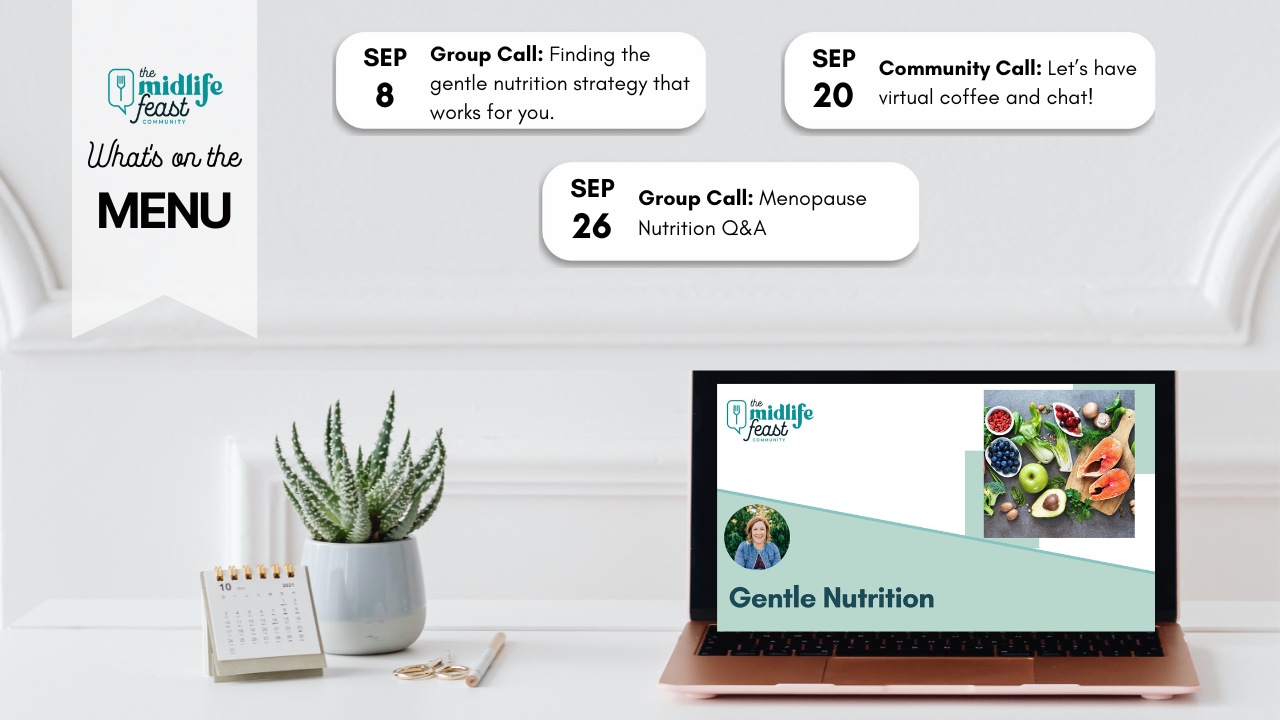
Gentle Nutrition is on the menu this month in The Midlife Feast Community. If you're trying to figure out what to eat in midlife and menopause without giving up bread or skipping breakfast, come on in!
The new season of the podcast starts on September 15th (mark your calendars!), and I can't wait to share some of the new things we're doing this year!
That's all for now!
Jenn




Responses