Menopause Joint Pain: Why It Happens and What Actually Helps
If getting out of bed has started to feel like a tin man impression, you are in very good company. Menopause joint pain is one of the most common symptoms of the menopause transition, yet it gets a fraction of the airtime that hot flashes and mood swings do.
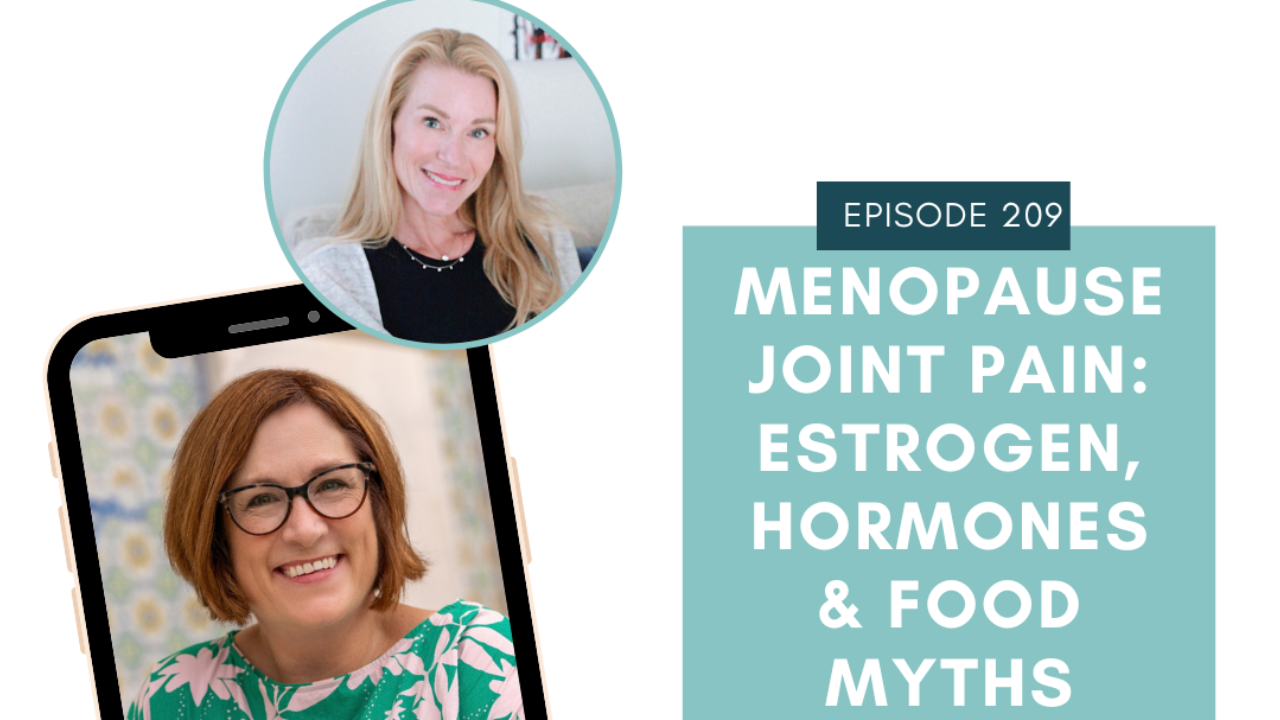
This year, World Menopause Day (October 18) is focused on chronic pain, so I invited Robyn Kievit, NP, RD, CEDS, MSCP, onto The Midlife Feast to unpack what is happening in our joints and muscles. Robyn was the first dietitian to become a nurse practitioner, which means she can talk about food and prescriptions in the same breath. That is a rare combination, and it made for a really grounded conversation.
Here are the biggest takeaways.
How common is menopause joint pain?
Very. In a 2024 review, orthopaedic surgeon Dr. Vonda Wright and colleagues introduced the term musculoskeletal syndrome of menopause to describe the group of symptoms linked to falling estrogen, including joint pain, loss of muscle mass, loss of bone density and progression of osteoarthritis. They estimate that more than 70% of women will experience musculoskeletal symptoms through the menopause transition, and about 25% will be disabled by them (Wright et al., Climacteric, 2024).
Robyn compares it to the genitourinary syndrome of menopause. Giving these symptoms a name helps women and clinicians connect the dots instead of treating each ache in isolation.
She also pointed out that pain rarely shows up alone. Poor sleep, fatigue and mood changes all make pain feel louder. When you are not sleeping, everything feels more sensitive, your joints included.
Why estrogen matters for your joints and muscles
Estrogen is anti-inflammatory and mildly immunosuppressive, and estrogen receptors are found almost everywhere, from your joints to the parts of your nervous system that process pain. When estrogen drops, that built-in protection drops with it.
One of Robyn's patients described starting an estrogen patch as feeling like moisturizer was being injected into her joints. That is an anecdote, of course, but it captures how many women describe the difference.
Why perimenopause can feel harder than postmenopause
For many women, the worst of the aches happens during perimenopause, when hormones swing up and down rather than settling at a steady low level.
I lived this myself. I couldn't tolerate the progesterone in hormone therapy, and in the year or two around my last period, I felt like the tin man every morning. Once I got moving I was fine, but I remember worrying about what was going on. Now, five years past menopause, those aches are gone.
Robyn's explanation is that the body does better once the rollercoaster evens out. I often describe it as your body losing its predictable "hormone soup." When the ingredients keep changing, a system that loves routine has a hard time keeping up.
She shared a related example: many women with rheumatoid arthritis feel much better during pregnancy, when estrogen is high, and some feel better again once they are through the menopause transition and the fluctuations stop.
Can hormone therapy help menopause joint pain?
For some women, yes. Robyn shared her own story. At 49 she had joint pain bad enough to wake her at night. She was told she couldn't use hormone therapy because of a family history of breast cancer, was sent to a rheumatologist, and was put on hydroxychloroquine and then methotrexate. When she finally found a clinician who looked at her full history and the current evidence, she started hormone therapy. Her pain isn't 100% gone, but it is dramatically better.
What the research can tell us is still limited. Much of what we know about hormone therapy and pain comes from clinical experience and case reports, and we need better studies. Menopause research has been underfunded for decades, and joint pain is one of the areas that has been left behind.
A few other points worth knowing:
- Having a chronic condition doesn't automatically rule out hormone therapy. If you are going into perimenopause with something like rheumatoid arthritis, it is important to work with someone who can see the whole picture, including your other medications.
- Starting later is an individual decision. Robyn explained that guidance has shifted from a strict five or ten year window after your final period toward individualized clinical decisions. Risks like stroke rise with age, so it is always a weighing of benefits and risks with your provider.
- You don't need hormone therapy if you don't have bothersome symptoms. If you are well past menopause, sleeping well and not dealing with hot flashes or joint pain, there is no reason to start out of fear.
What about testosterone for joint pain?
Testosterone is having a moment, and there are lots of encouraging stories about it easing muscle and joint pain. I have seen one myself in my practice.
Right now, though, the evidence-based reason to prescribe testosterone for women is low sexual desire that causes distress (hypoactive sexual desire disorder). Using it also means bloodwork before starting, again at around six weeks, and then regularly after that to keep levels in a safe range.
Robyn and I both land in the middle. Testosterone isn't a miracle that every woman needs, and it isn't something to dismiss either. If your provider thinks it is safe for you, it may be worth a try. What we would both love is updated clinical guidelines, so women aren't caught between online camps arguing about it. As Robyn put it, we are all trying to help women feel better, so "just be kind."
It's okay if hormones don't work for you
Hormone therapy helps a lot of women. It is also a medication, and sometimes medications don't work or come with side effects you can't live with. Bleeding, breast tenderness, bloating and mood changes from progesterone are all real reasons women stop.
In the Feaster community, I regularly hear from women who spent months adjusting doses and formulations before deciding to stop. That is a valid choice. There are also non-hormonal medication options for some symptoms, so talk with your provider about what fits.
And whether or not you use hormones, the foundations still matter: how you move, how you sleep, how you nourish yourself, how you relate to your body and who you have around you for support.
Is there an anti-inflammatory diet for menopause joint pain?
This is where Robyn and I put on our dietitian hats. The short answer is that no single food has been shown to be inflammatory or anti-inflammatory on its own. Sugar isn't poison, and turmeric isn't a cure. Individual foods just don't have that kind of power.
What the research does support is patterns of eating. A Mediterranean-style pattern is one example: a bit more fish, chicken, beans, lentils, nuts and seeds, and a bit less red meat and highly processed food. When sugar shows up in research as a problem, it is often a stand-in for an overall pattern that is low in fibre, fruits, vegetables and protein.
That is why I prefer adding foods in rather than cutting things out. It is easier, more sustainable, and doesn't turn every meal into a test. One meal won't inflame your body or derail your health.
There is also no standard definition of an "anti-inflammatory diet." When someone takes research and packages it into their own anti-inflammatory menopause plan, it is usually just another diet with a new name.
A word about supplements
Robyn sees so many women taking a cupboard full of supplements, often bought because of an Instagram ad or a friend who sells them. Some are useful. Many aren't.
My rule of thumb: if you don't know why you are taking something, you won't know if it is working. Robyn often asks patients what it would feel like to safely drop a few supplements, save a few hundred dollars a month, and feel just as good, or better.
What to do if your joints are aching
If this episode sounds like your life, here are a few next steps:
- Track your symptoms, including sleep, mood and energy, since they all affect how you experience pain.
- Look for a Menopause Society Certified Practitioner (MSCP). They are required to stay current on guidelines, which change quickly.
- Bring the research with you. Robyn suggests sharing Dr. Wright's paper and saying, "This sounds like me. Can you help?"
- Ask for the whole picture, including your other conditions, medications and what matters most to you.
- Keep the basics in place: regular movement, enough sleep, and meals that feel nourishing and satisfying.
About Robyn Kievit
Robyn Kievit, NP, RD, CEDS, MSCP, is a nurse practitioner, registered dietitian, certified eating disorder specialist and Menopause Society Certified Practitioner. She was the first dietitian to become a nurse practitioner.
For dietitians and clinicians, Robyn's course, Beyond Nutrition: Integrating Psychopharmacology and Hormone Therapy in Perimenopause and Menopause, is a practical primer on the medications your clients are using. I have taken it and highly recommend it. Use code JENN10 for a discount.
- Website: robynkievit.com
- Course: robynkievit.com/course
Listen to the full episode
There is so much more in the conversation, including Robyn's case studies and her thoughts on finding the right menopause care. Listen to Episode 209 of The Midlife Feast here.
Related episodes:
- Non-Hormonal Alternatives to HRT with Dr. Suzanne Gilberg-Lenz
- Autoimmune Disease in Midlife: Beyond Diet Culture Myths with Dr. Alison Danby ND
- Hot Flashes 101: Can You Eat to Beat the Heat?
Frequently asked questions about menopause joint pain
Can menopause cause joint pain?
Yes. Falling and fluctuating estrogen affects joints, muscles and connective tissue, and a 2024 review estimates more than 70% of women experience musculoskeletal symptoms through the menopause transition. Poor sleep and mood changes can make that pain feel worse.
Does menopause joint pain go away?
For many women, aches ease once hormones settle after menopause, as the up and down of perimenopause is often the hardest part. This isn't true for everyone, so persistent or severe pain is worth discussing with a knowledgeable provider.
Does hormone therapy help with menopause joint pain?
Some women find significant relief, though research is still limited. Whether it is right for you depends on your symptoms, history and preferences, which is why an individualized conversation with a menopause-trained clinician matters.
What should I eat for menopause joint pain?
Focus on your overall pattern of eating rather than any single food. A Mediterranean-style pattern with plenty of plants, fish, beans, lentils, nuts and seeds is a helpful guide, and adding foods in tends to work better than cutting foods out.
Come ask your hormone questions
If you have questions about hormone therapy, Robyn is joining us inside the Midlife Feast Community for a live Q&A on October 14, and the recording lives in the Feaster Library so you can watch anytime.
Start your 7-day trial of the Midlife Feast Community and come join us at the table.
Grab my Menopause Nutrition Guide
Learn how to support your menopause and midlife journey with some of my best tips and recipes.
We hate SPAM. We will never sell your information, for any reason.